
English
English in Detail
Once strong foundational skills are established, students extend their learning through our English curriculum, where they read, discuss and write about high-quality texts that challenge their thinking and deepen their understanding of language and ideas.
A Text-Based Curriculum
Our English program is built around high-quality literature selected from diverse authors, genres, styles, time periods and topics.
Texts are chosen to:
-
Expose students to rich, complex language and ideas.
-
Develop comprehension and vocabulary in meaningful contexts.
-
Model a wide range of text types and writing styles.
-
Inspire curiosity, critical thinking and creativity.
These shared class texts form the foundation for the explicit teaching of reading, vocabulary, grammar and writing.
Elements of English
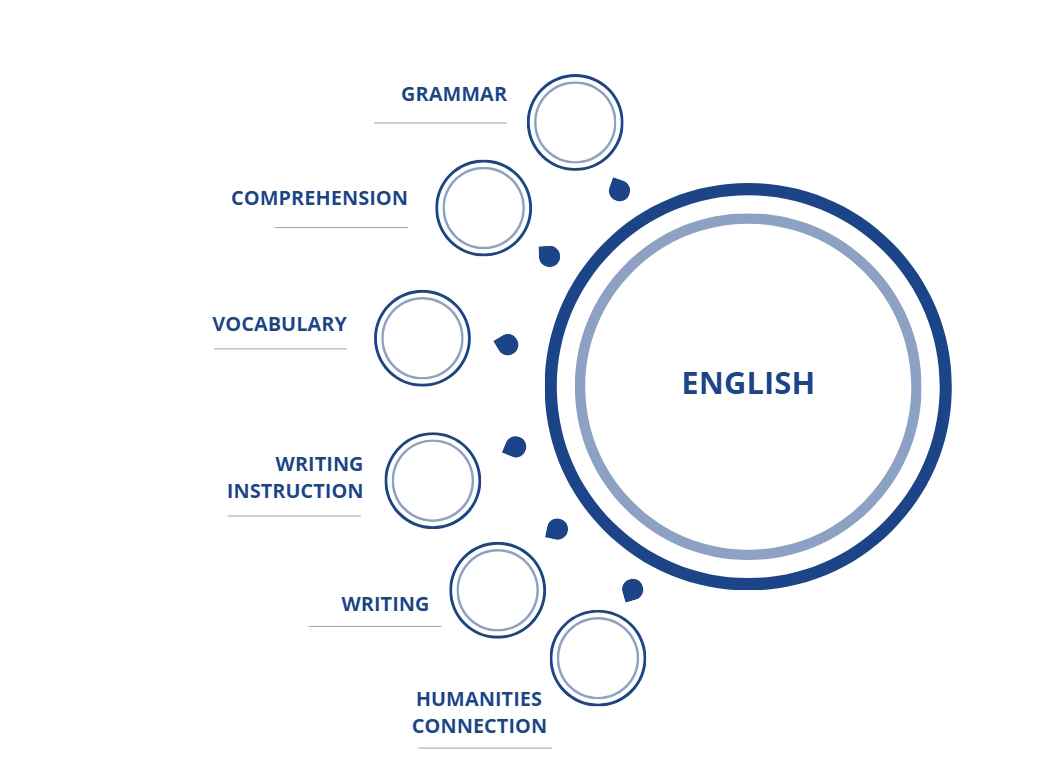
English at Orchard Park Primary School is made up of several interconnected elements that work together to develop deep literacy understanding.
These elements are explicitly taught through the high-quality literature students are reading in class.
Grammar, vocabulary, comprehension and writing are not taught in isolation — they are integrated within every reading experience.
As students engage with texts, they explore how authors use language, sentence structures and text organisation to convey meaning and effect.
Students then apply these understandings in their own writing, using modelled examples and guided practice to develop confidence and sophistication as writers.
How English Lessons Are Structured
Our English lessons follow a consistent, evidence-based structure that combines reading, discussion, vocabulary and writing.
Each phase of the lesson is purposeful and explicitly designed to develop comprehension, language and writing skills.
1. Read – The teacher reads a shared “stretch text” aloud, modelling fluent reading and explicitly teaching comprehension strategies such as predicting, summarising, questioning and making inferences.
2. Discuss – Planned pause points allow for rich conversation, enabling students to share ideas, justify opinions and build understanding collaboratively. Comprehension skills are deepened as teachers prompt students to connect ideas, interpret author intent and think critically about language and structure.
3. Vocabulary – Key words are selected directly from the text being studied. These are unpacked to build meaning, deepen word knowledge and strengthen students’ ability to use sophisticated vocabulary in both speech and writing.
4. Write – Students complete short, purposeful writing tasks that consolidate their understanding of the text. Within this phase, teachers also provide explicit instruction in writing and grammar, building students’ skills and understanding at the sentence level, paragraph level and genre level.
This includes developing grammatical accuracy, cohesion, reasoning and sophistication in written expression.
Across these phases, comprehension strategies and skills are explicitly taught and practised.
Writing is always connected to reading, ensuring that students not only understand what they read but can apply and extend that understanding through their own written language.
Accountable Independent Reading (AIR)
Although English lessons are a shared reading experience with the whole class, each lesson also includes an Accountable Independent Reading (AIR) component.
During this time, students read a section of the class text independently and complete a short comprehension response task linked to the comprehension strategy or skill focus of the lesson.
AIR tasks give students the opportunity to practise applying comprehension strategies on their own, deepening their understanding of the text while promoting independence and accountability.
These tasks also provide valuable insights for teachers about how well students are transferring taught skills into their independent reading.
Examples of AIR tasks may include:
-
Drawing a picture of what happened in the section they read and explaining it to the teacher or a partner.
-
Matching or sequencing pictures from the story in the correct order.
-
Identifying and circling a focus sound, word or character name in the text.
-
Writing a short summary of the section read.
-
Responding to a comprehension question that targets a specific strategy (e.g. What evidence in the text supports your prediction?).
-
Completing a cause-and-effect chart or character feelings table.
-
Highlighting or noting examples of descriptive language, figurative language or dialogue that reveal character traits.
-
Responding to a “because, but, so” prompt related to a key event or idea.
AIR ensures that every student — from Prep to Year 6 — has time to read, think and respond independently.
It strengthens comprehension, encourages reflection and supports the gradual move from shared reading to independent understanding.
Writing
Writing is a key focus across both Core Literacy and English. In Core Literacy, handwriting is explicitly taught to build fluency and accuracy. In English, writing is taught as a text response and composition skill, enabling students to express ideas, analyse texts and craft their own pieces of writing with increasing complexity.
Writing is a vital component of every English lesson; however, at least once a week, students participate in a dedicated writing lesson as part of the English program. These lessons use the Writing Feedback Loop, which provides a structured process for teaching, practice, feedback and revision.
-
Teach – Teachers explicitly demonstrate a writing skill, strategy or text feature, often linked to the class text or genre focus.
-
Write – Students apply the focus skill independently, using scaffolded support as needed.
-
Feedback – Teachers provide targeted feedback directly related to the learning focus of the lesson.
-
Revise – Students act on the feedback immediately, improving or rewriting their work based on clear success criteria.
This process ensures that writing instruction is explicit, responsive and improvement-focused, giving every student the opportunity to grow as a confident, thoughtful and effective writer.
Why This Approach Works
Our approach to teaching English is grounded in contemporary research on how students best develop comprehension, language and writing skills.
It draws on the Science of Reading, cognitive science, and the work of leading researchers such as Dr Emina McLean, who has worked closely with our school to embed explicit, evidence-based literacy instruction.
Key principles that underpin our English approach include:
-
The Simple View of Reading
Reading comprehension is developed through the interaction of two components: decoding and language comprehension.
While decoding is established through Core Literacy, language comprehension is strengthened through English lessons that explicitly teach vocabulary, syntax, and text structure. -
Scarborough’s Reading Rope
Fluent, skilled reading requires the weaving together of multiple strands — background knowledge, vocabulary, language structure, verbal reasoning and literacy knowledge.
Our English lessons strengthen these strands by immersing students in rich literature and explicit language teaching. - Explicit Instruction and Cognitive Load Theory
Students learn best when teachers clearly model new concepts, provide guided practice, and gradually release responsibility for independent application.
This approach minimises cognitive overload and maximises student success. -
Emina McLean’s Research on Reading and Writing Instruction
Emina McLean’s work emphasises explicit, structured, cumulative and connected literacy instruction that builds automaticity in reading and depth in comprehension.
Her research highlights the importance of integrating reading, vocabulary, grammar and writing — all of which are central to our English curriculum design. -
High-Quality Literature as a Context for Learning
Using rich, well-chosen texts ensures that comprehension, vocabulary and grammar are taught in meaningful, authentic contexts.
This aligns with research showing that content-rich, text-based approaches develop both language and knowledge — key components of lasting literacy growth.
Together, these principles ensure that our English program is structured, connected and responsive — enabling every student to become a confident reader, critical thinker and effective communicator.
© Orchard Park Primary School